Afifla: A Friendly Handwritten Font That Brings Projects to Life
Some fonts just feel good to look at. Afifla is one of them. This casual handwritten typeface carries a warmth that's hard to manufacture, balancing playfulness with the kind of approachability that makes people want to lean in and read more. Whether you're a graphic designer refining a brand identity, a small business owner polishing social media visuals, or a hobbyist putting together a scrapbook for a friend, Afifla offers a visual voice that feels personal without being precious.
What makes Afifla stand out in a sea of handwritten fonts is its authenticity. It doesn't try too hard to be whimsical, and it doesn't force the imperfections that some designers associate with handwriting. Instead, it lands in a sweet spot—friendly, legible, and genuinely versatile. Let's walk through what this font actually brings to the table and where it might fit into your creative workflow.
What Afifla Actually Is
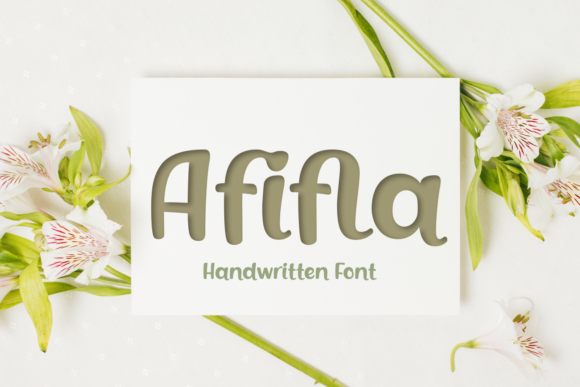
Afifla is a handwritten display font built around soft curves, rounded letterforms, and a natural baseline rhythm that mimics how people actually write. Unlike rigid sans-serifs or overly ornate scripts, Afifla feels conversational. Each character flows into the next with a comfortable pace, making it ideal for short-form content that needs emotional warmth.
The font draws from casual handwriting styles—think gel pen on paper, not fountain pen on parchment. There's a contemporary quality to it that aligns well with modern design trends favoring approachability over formality. It's not a font you'd use for a legal document or a technical manual, but that's not what it's designed to do. Afifla shines in contexts where personality matters more than precision.
Key Characteristics of Afifla
When you look closely at Afifla, several qualities emerge that define its character:
- Natural letter spacing that avoids the mechanical uniformity of geometric fonts, giving text an organic rhythm
- Soft stroke modulation where line weights shift gently, simulating the pressure changes of real handwriting
- Friendly ascenders and descenders that extend with a relaxed, unhurried quality
- Consistent x-height that keeps readability intact even at smaller display sizes
- Contextual charm in letter connections that feel spontaneous rather than engineered
These traits combine to create something that feels less like a digital typeface and more like a note from someone you know. That emotional quality is exactly why designers reach for fonts like Afifla in the first place.
Where Afifla Performs Best
Handwritten fonts can be tricky to deploy well. Use them in the wrong context and they undermine credibility. Use them in the right context and they elevate the entire piece. Afifla's sweet spot is broad enough to cover quite a bit of ground, but understanding where it truly excels helps you make smarter design decisions.
Social Media and Digital Content
Instagram posts, Pinterest graphics, TikTok thumbnails, and YouTube channel art all benefit from fonts that feel human. Afifla works exceptionally well for quote graphics, story stickers, and branded overlay text that needs to feel like a friend talking rather than a corporation broadcasting. The casual handwritten aesthetic cuts through the polished perfection of most social feeds, giving content a relatable edge.
Consider a wellness coach sharing daily affirmations. A clean sans-serif might feel clinical. Afifla, on the other hand, makes those words feel like they were jotted down by someone who genuinely cares. The same logic applies to food bloggers annotating recipe photos, travel influencers captioning destination snapshots, or educators creating engaging slide decks for online courses.
Branding and Visual Identity
Small businesses, in particular, have gravitated toward handwritten fonts for logo design and brand collateral. Afifla offers the kind of warmth that works for bakeries, coffee shops, daycare centers, handmade goods stores, pet services, and creative studios. It signals that the brand values personal connection over corporate polish.
When integrated into a logo, Afifla pairs nicely with simpler sans-serif subtext—letting the handwritten element carry the personality while the supporting typeface handles the factual details. Business cards, thank-you notes included with orders, and storefront signage all become opportunities to reinforce that friendly brand voice.
Print and Physical Media
Despite living in a digital-first world, printed materials haven't disappeared. Afifla translates beautifully to physical applications. Greeting cards, wedding invitations with a casual theme, event flyers for community gatherings, classroom posters, and product packaging for artisanal goods all benefit from its approachable character.
One area where Afifla particularly stands out is in DIY and craft projects. Scrapbookers, journaling enthusiasts, and Cricut users often look for fonts that feel genuinely handwritten—not like a computer approximated handwriting. Afifla's natural flow makes die-cut vinyl projects, iron-on transfers, and paper crafts feel more authentic and less manufactured.
Educational and Instructional Design
Teachers, instructional designers, and educational content creators face a constant challenge: making material engaging without sacrificing clarity. Afifla can serve as an accent font in worksheets, classroom displays, and digital learning modules. Used for headings, callout boxes, or motivational messages, it softens the institutional feel that educational materials sometimes carry.
For early childhood education specifically, handwriting-style fonts help young learners connect printed text to the writing they're learning to produce themselves. Afifla's legible, rounded forms support that connection without introducing confusing letter variations.
Practical Benefits of Choosing Afifla
Beyond aesthetics, there are functional reasons to consider Afifla for your projects. Understanding these practical advantages helps justify the choice beyond "it looks nice."
Readability at multiple sizes is a genuine strength. Some handwritten fonts become illegible below a certain point size, but Afifla maintains clarity across a reasonable range. This means you can use it for both prominent headlines and smaller supporting text without losing comprehension.
Emotional engagement might sound like a soft metric, but in marketing and communication contexts, it translates to real outcomes. Fonts influence how people perceive information. A friendly handwritten typeface can increase trust, encourage longer reading times, and make calls-to-action feel like invitations rather than demands. For email marketers, social media managers, and content strategists, that psychological layer matters.
Versatility across platforms is another practical consideration. Afifla works in Canva designs, Adobe Creative Suite projects, website headers (when properly embedded), video overlays, and print layouts without requiring extensive adjustments. That cross-platform flexibility saves time when you're juggling multiple content formats.
Pairing Afifla with Other Typefaces
Handwritten fonts rarely work in isolation for full-page layouts. Knowing how to pair Afifla with complementary typefaces expands its usefulness considerably.
A common and effective approach is pairing Afifla with a clean, understated sans-serif. The handwritten font handles the personality—headlines, pull quotes, emphasized phrases—while the sans-serif carries body text, navigation elements, and factual information. This creates visual contrast and prevents the handwritten style from becoming overwhelming.
Serif pairings can work too, especially for projects with a slightly more traditional or literary tone. A delicate serif beneath an Afifla heading creates a layered, editorial feel that suits blog posts, magazine-style layouts, and book covers.
When pairing fonts, pay attention to x-height compatibility. If Afifla's lowercase letters are significantly taller or shorter than your secondary font's lowercase letters, the mismatch can feel jarring at larger sizes. Testing a few combinations before committing saves frustration later.
Considerations When Using Afifla
No font is right for every situation, and Afifla has contexts where it shouldn't be used. Body text at small sizes over long reading stretches can become fatiguing with handwritten fonts in general—even ones as legible as Afifla. Reserve it for display purposes and short-form content.
Formal business communications, legal documents, and technical documentation demand typefaces that prioritize neutrality and precision. Using Afifla in these contexts would undermine the seriousness of the content. Similarly, brands in industries like finance, law, or enterprise technology may find that a handwritten font conflicts with their positioning, even if the font itself is charming.
Licensing is another practical consideration. Before using Afifla in commercial projects—particularly for logos, merchandise, or large-scale print runs—confirm the license terms. Most font creators outline clear usage rights, and respecting those terms protects both your project and the designer's work.
Real-World Observations
Designers who've worked extensively with handwritten fonts often note that the best ones disappear into the design. You don't notice the font itself; you notice how the message feels. Afifla achieves this by avoiding the exaggerated quirks that make some handwriting fonts feel novelty-driven.
A freelance graphic designer creating branding for a local bakery might choose Afifla for the shop's menu headers and window signage. The font reinforces the idea that everything is made by hand, with care. A content creator running a lifestyle channel could use it for video title cards, giving each episode a consistent, approachable visual signature. An educator building a digital course might apply it to section dividers and key takeaway slides, making the learning experience feel more conversational.
What's consistent across these scenarios is that Afifla isn't the star of the show—it's the supporting element that makes the star look better. That's the mark of a genuinely useful design asset.
Making the Most of Afifla in Your Workflow
If you decide to incorporate Afifla into your projects, a few workflow tips can help you get the best results. First, experiment with letter-spacing adjustments. Handwritten fonts often benefit from slight tightening or loosening depending on the context and the words being set. The default spacing is a starting point, not a rule.
Second, consider color choices carefully. Afifla's friendly character pairs well with warm, earthy tones and pastels. High-contrast black-on-white works too, but the font's personality softens further when you introduce a little color warmth into the equation.
Third, don't overuse it. Restraint makes handwritten fonts more impactful. Using Afifla strategically—on a headline, a logo, or a key phrase—preserves its charm. Blanketing an entire document or website in it dilutes the effect and can make the design feel amateurish.
Finally, test across devices and formats. What looks crisp on a desktop monitor might appear differently on a phone screen or printed on uncoated paper. A quick cross-check catches issues before they reach your audience.
Why Afifla Resonates with Today's Audiences
There's a broader cultural context worth noting. Audiences have grown weary of overly polished, impersonal design. The rise of authentic, human-centered branding reflects a desire for connection—something that feels real rather than manufactured. Handwritten fonts like Afifla tap directly into that desire.
In an era where AI-generated content and automated design tools are proliferating, the intentionally human quality of a handwritten typeface carries symbolic weight. It says someone made this. Someone took the time. That subtext, operating below conscious awareness, influences how people respond to your message.
This doesn't mean every project needs a handwritten font. But for the right project, at the right moment, Afifla offers something that geometric precision and typographic neutrality cannot: the feeling of a person on the other side of the screen or page.
Whether you're creating, selling, teaching, or simply sharing something you care about, the fonts you choose shape how that message lands. Afifla lands warmly. And in a world that can always use a little more warmth, that's a meaningful quality to have at your disposal.